
Introduction of GST would make Indian products competitive in the domestic and international markets.

Here's everything you need to know about the Goods and Services Tax Bill.

The previous United Progressive Alliance government had undertaken some decisions, like introduction of retrospective tax amendments and GAAR, which had dented investor sentiments.

Jaitley says govt is open to scrapping 1% additional tax on GST

'Given that debt AIFs, by nature, target a higher portfolio return, it is likely to attract investors like HNIs, family offices, etc, looking for a higher yield debt product.'

CAs not sure if individuals declaring unaccounted money will get immunity from reassessment as these provisions are not covered in the Bill.

GST will also make our exports more competitive and also provide a level playing field to domestic industry to compete with imports, the President said.

Accusing the Congress of creating obstacles in the path of growth and economy, he declared that the government would try to get the bill passed with the help of parties
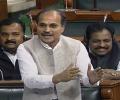
Joshi said the Congress is 'led by an infiltrator' and is targeting Modi who hails from a humble family and is a popular leader.

The Bill was introduced in the Lok Sabha in December.

'Modi had not discussed demonetization with me prior to his announcement on 8 November 2016. 'I learnt of it along with the rest of the country. 'I was not surprised when he did not discuss the issue with me prior to making the public announcement. 'It fitted in with his style of making dramatic announcements.' A fascinating excerpt from Pranab Mukherjee's The Presidential Years: 2012-2017.

The Opposition on Monday charged the government with trying to promote crony capitalism, creating fear by giving "unbridled power" to taxmen, trying to snoop into people's lives through increased use of Aadhaar through the provisions of the Finance Bill.

Nearly three weeks after Prime Minister Narendra Modi announced junking high denomination 500 and 1000 rupee notes, Finance Minister Arun Jaitley introduced a bill to amend the income tax law.

Drabu said the GST regime will roll out in the state at midnight on Friday, making Jammu and Kashmir the last state to join the new tax regime.
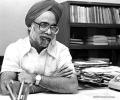
What stood out in his 15-year journey as a member of the political executive at the Centre was his glowing record as India's most successful and effective finance minister. Both as prime minister and finance minister, he understood the importance of gradualism, except when the economy or the polity was in a crisis.

Only after its recommendations will the central GST, integrated GST and state GST Bills be taken up

The Central Board of Direct Taxes has said the government has not introduced any new provision regarding the chargeability of tax on jewellery.

Under the GST regime, most manufactured goods will turn cheaper.
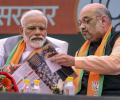
Rediff.com does a quick checklist on what the two manifestos have to say on hot-button issues of the day.

The BSE Mid-Cap index was currently down 1.25%
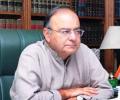
The state has extended its full support, provided its revenues are protected.

The Opposition said that the government was 'bull-dozing'.

Tax experts said as a result of the amendments, companies operating from countries with which India didn't have DTAAs, would try to shift to countries with which India had such agreements, including Mauritius.

As many as 30 sub-groups and committees worked tirelessly to devise rules and laws as well as fix tax rates for over 1,200 goods and services.

It will reduce compliance cost as the assessee will not have to maintain multiple records for a variety of taxes

The Prime Minister also underscored the importance of public sector undertakings in the country.

The implementation of the GST will indeed be a landmark reform.

Clarifying on reports that it cannot scrutinise tax returns of political parties, CBDT said: "There are enough provisions in the Income Tax Act to scrutinise the accounts of the political parties and these political parties are also subject to other provisions of income tax including filing of return."

The Modi government is notoriously honest about one fact: It does not listen to economists, observes Shekhar Gupta.

Concessional rate of tax on dividends received by Indian companies from foreign subsidiaries will be done away with from April 1, a change that may hamper global expansion of Indian companies and compel some firms to move their headquarters out of India to geographies such as Singapore and Dubai. At present, dividends received by Indian companies from their foreign subsidiaries are subject to a concessional tax rate of 15 per cent under Section 115BBD of the Income Tax (I-T) Act. The provisions of this section shall not apply from assessment year 2023-24 onwards, according to the Finance Bill.

The Department of Telecommunications (DoT) has initiated discussions with banks to address financial stress in the telecom sector, particularly Vodafone Idea Ltd (VIL) that urgently requires fund infusion to stay afloat. There was a meeting of DOT officials and senior bankers on Friday on the issue of Vodafone, sources said, adding that banks have been asked to look for a solution within the prudential guidelines. According to sources, senior officials from the country's biggest lenders State Bank of India and Bank of Baroda were also present among others in the meeting. More such meetings are expected to take place in the coming days, they said.
According to the draft, in the northeastern states the threshold is at Rs 500,000.

The govt will have to clear hurdles to push GST by March 2015.
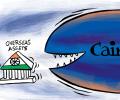
Faced with prospect of its assets across the globe being seized just like Pakistan and Venezuela, the government decided to scrap retrospective taxation but the international embarrassment could have been avoided had 'attached' shares of Britain's Cairn Energy Plc not been sold, according to tax and legal experts. On Thursday, the government introduced a Bill in Parliament to scrap the tax rule that gave the tax department power to go 50 years back and slap capital gains levies wherever ownership had changed hands overseas but business assets were in India. The 2012 legislation was used to levy a cumulative of Rs 1.10 lakh crore of tax on 17 entities, including UK telecom giant Vodafone, but substantial punitive action was taken only in the case of Cairn.

The onus to explain that the gold jewellery was inherited or bought from known sources of income would be on the owner.

The GST bill is stuck in the Rajya Sabha where the ruling NDA govt does not have a majority as well as stiff opposition by the Congress

GST seeks to subsume many indirect taxes at the Central and state levels.

The levy of retrospective tax on the UK's Cairn Energy Plc is a tale of bizarre twists and turns that saw its attached shares being sold in May 2018 amid the passing of the baton from a full-time finance minister to interim one and the talks at the highest level to resolve the dispute, to claims that levy of back taxes was a result of an investigation into Panama Papers leak. The government late last month refunded about Rs 7,900 crore it had collected from selling residual shares of the British firm in its erstwhile India unit, seizing dividend and withholding tax refunds, to settle an eight-year-old dispute that had tarred the country's reputation as an investment destination. But, this did not come about easily. For seven years, the establishment vehemently justified in courts and outside seeking of Rs 10,247 crore in back taxes plus interest and penalty from a firm that gave India its biggest onshore oil discovery.

Following several instances of poor drafting of Cabinet notes and bills in the recent past, on September 11, the Cabinet Secretariat wrote to all ministries and departments to read up paragraph 55 of the 'Handbook of Writing Cabinet Notes'. Archis Mohan reports.

A slew of challenges that are yet to be resolved include the lack of consensus between the Centre and states over the GST exemption threshold limit, dual control over scrutiny and assessment
